SaasMay 27, 2026
ForgeAPI SaaS Platform
 Dhaval AgrawalDhaval Agrawal
ForgeAPI started as a straightforward brief: developers waste too much time jumping between tools. There's the editor for writing code, a separate testing environment, a docs platform that nobody updates, and a CI/CD pipeline that might or might not reflect reality. Every tool is good at its thing — the problem is the space between them.
We spent the first week not designing anything. We read developer forums. We did eight interviews with backend engineers and product teams. We lurked in Discord servers for Postman, Swagger, and Insomnia users.
The pattern was relentless: nobody hated any single tool. They hated the seams between them. You define your schema in one place, test in another, document in a third, and deploy through a pipeline that has no knowledge of any of the above. When something breaks in production, you're triangulating across four different dashboards.
We analyzed survey responses and usability feedback from developers and product teams using existing API tools. The numbers weren't shocking — they confirmed exactly what the interviews had told us, which was validating in its own uncomfortable way.
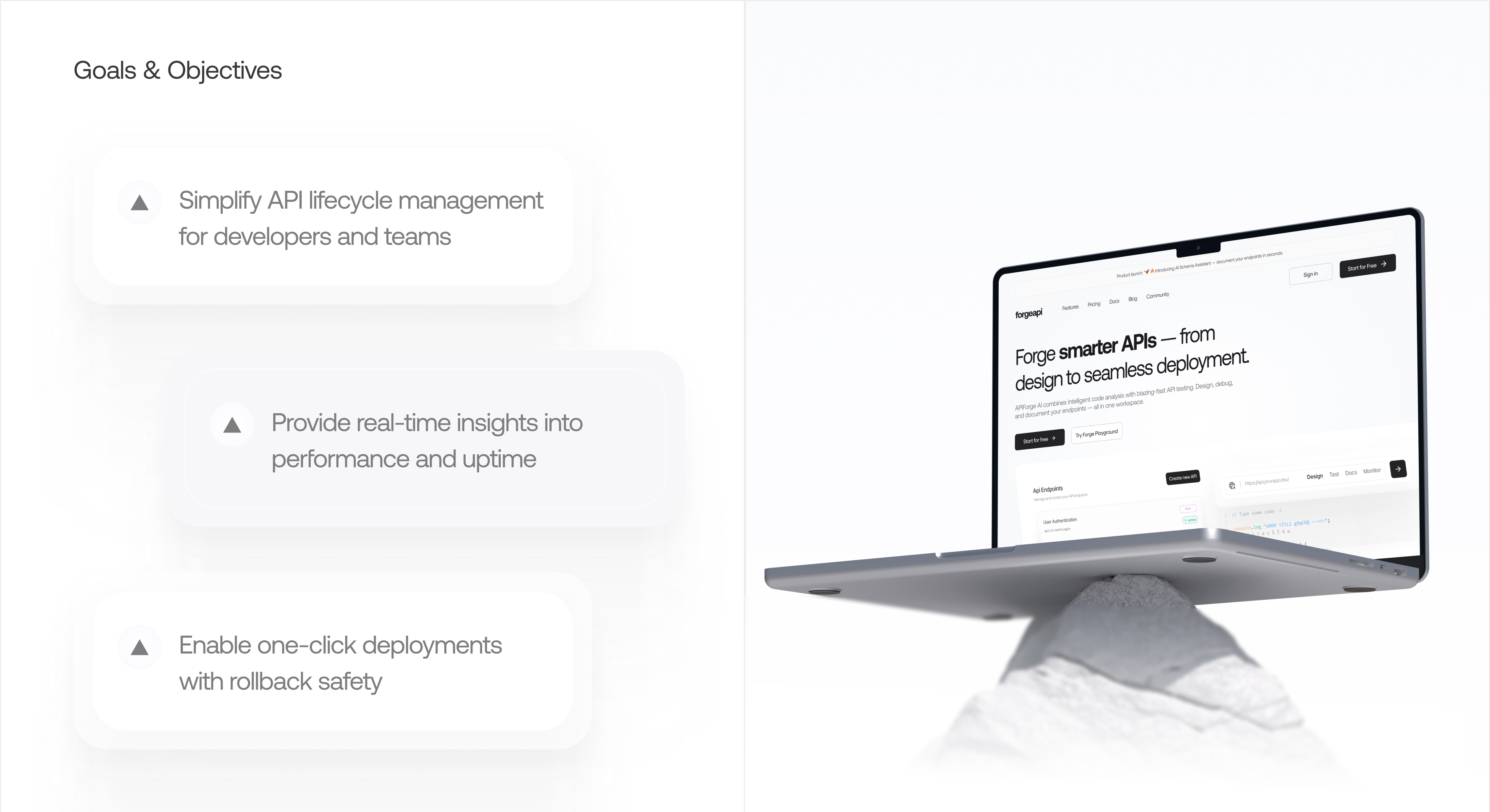
We had a long list of things ForgeAPI could do. We ruthlessly cut it down to three things it had to do well before anything else. Scope creep was going to be the real enemy here, not technical complexity.
The project ran eight weeks total. The first two were pure research and IA — no visual work at all, which was harder to hold to than we expected. Weeks three and four were wireframes and flow validation. Weeks five through eight were visual design, component building, and handoff.
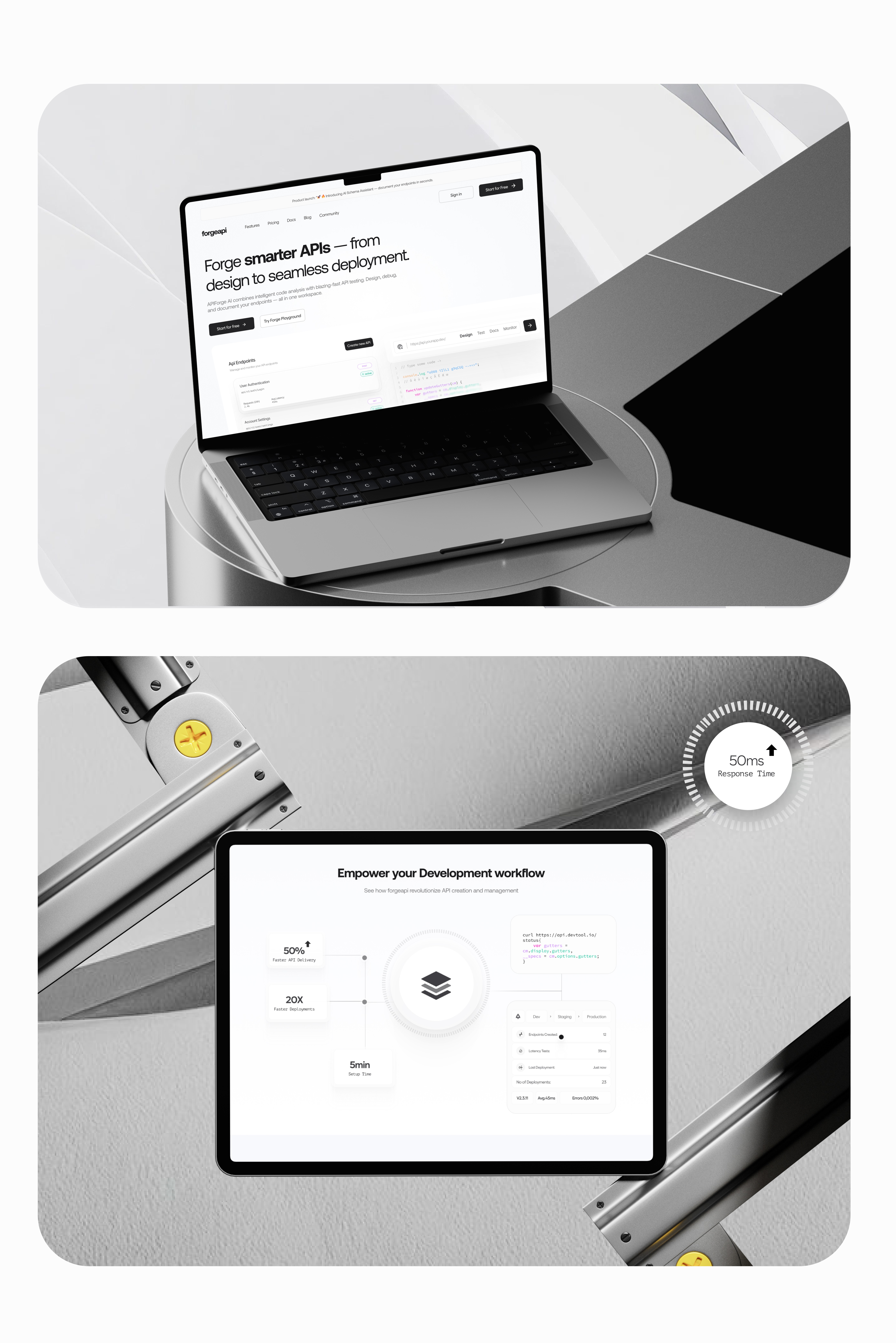
The font choice was a genuine debate. We tried Inter first — everyone does — and it felt immediately forgettable for a product trying to feel authoritative and technical. We landed on Aeonik: a geometric sans-serif that sits between professional and distinctive without trying too hard.
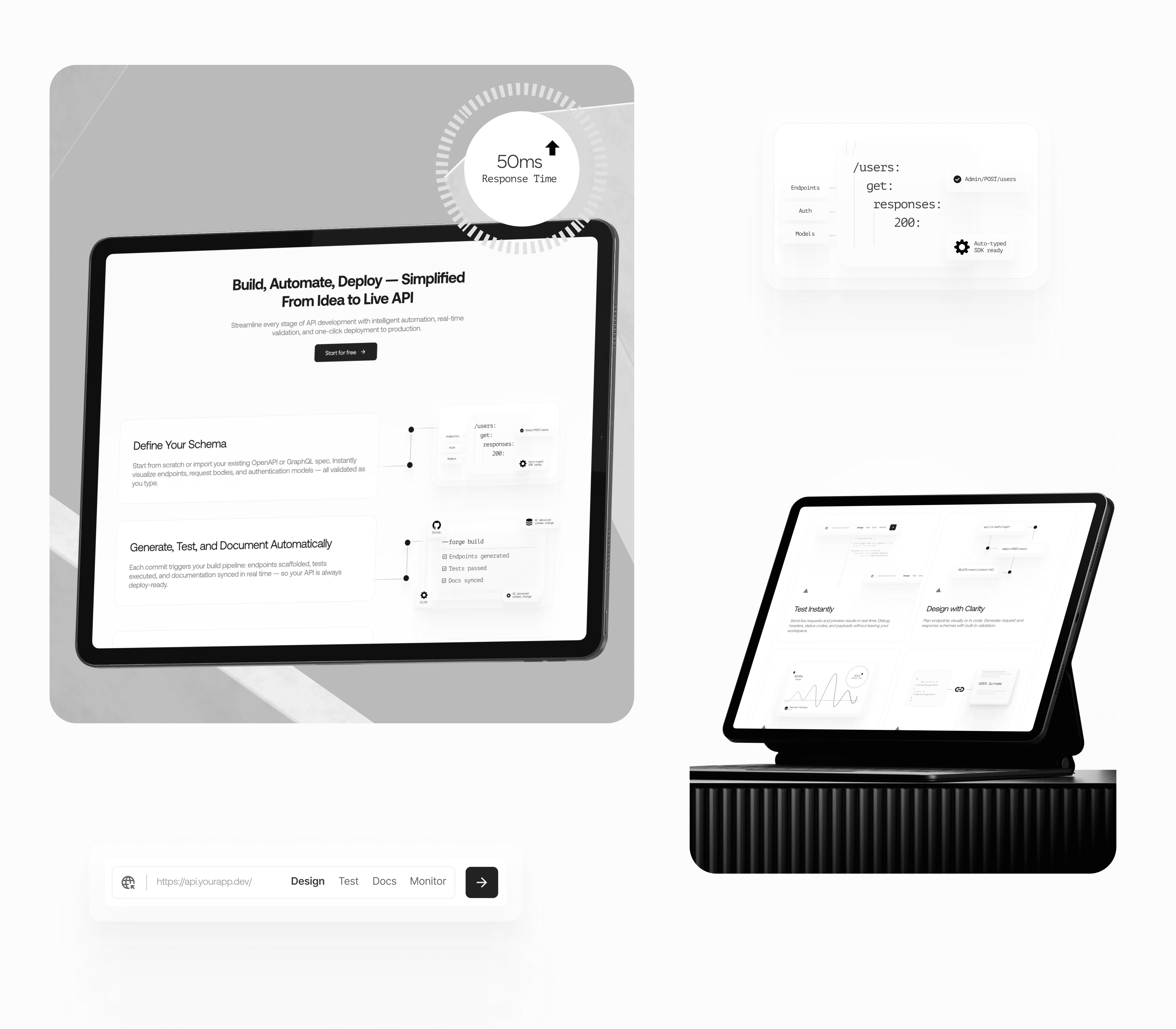
The landing page structure went through four major revisions. The challenge wasn't explaining what ForgeAPI does — that's easy. The challenge was making a developer actually believe it, in the 90 seconds before they bounce.

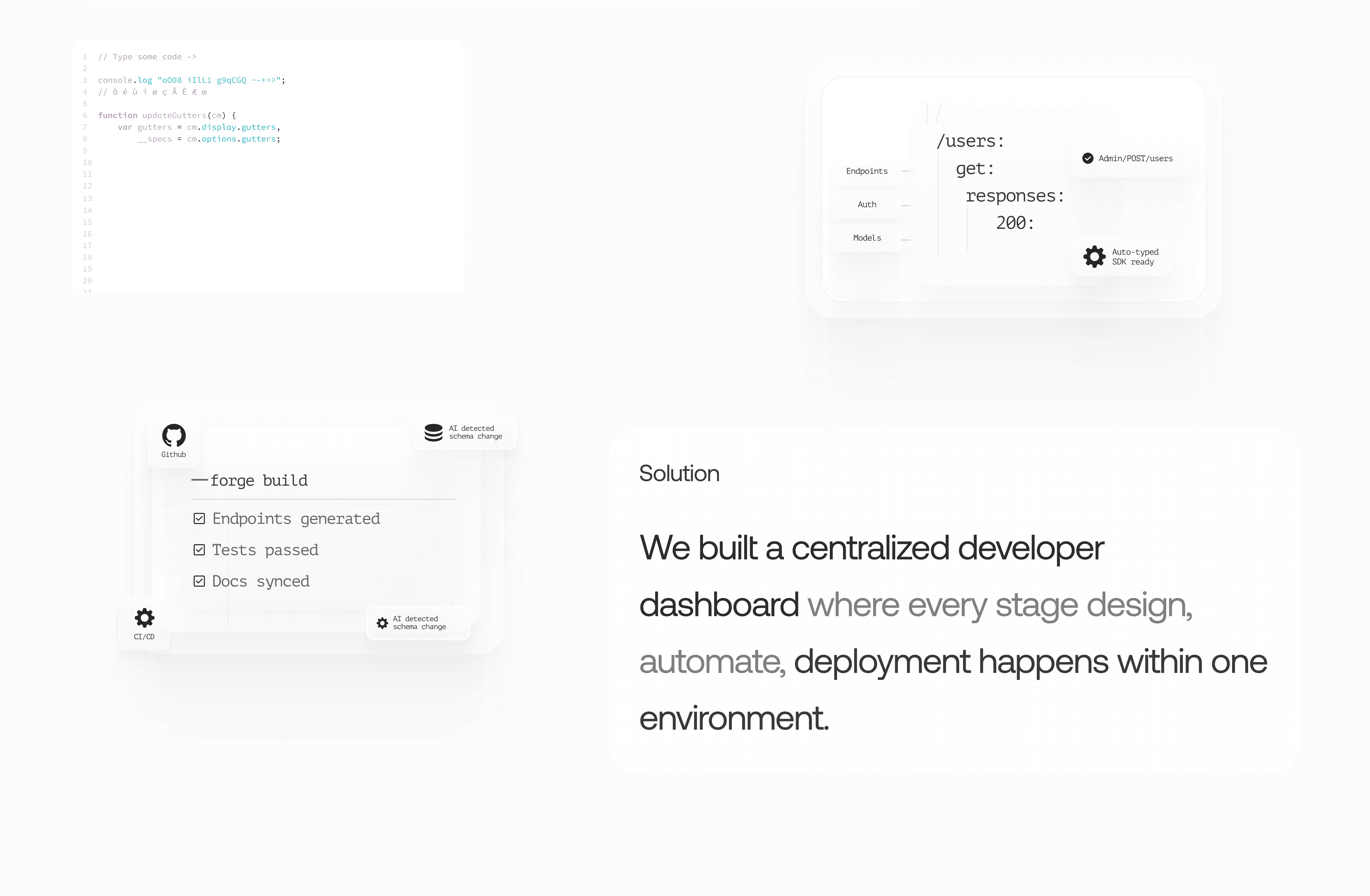
The feature that we were most proud of, and that took the longest to communicate clearly, was the automated pipeline. Every commit to the repo triggers the build pipeline, which scaffolds endpoints, runs the test suite, and syncs the docs — all in real time. The API is always deploy-ready.
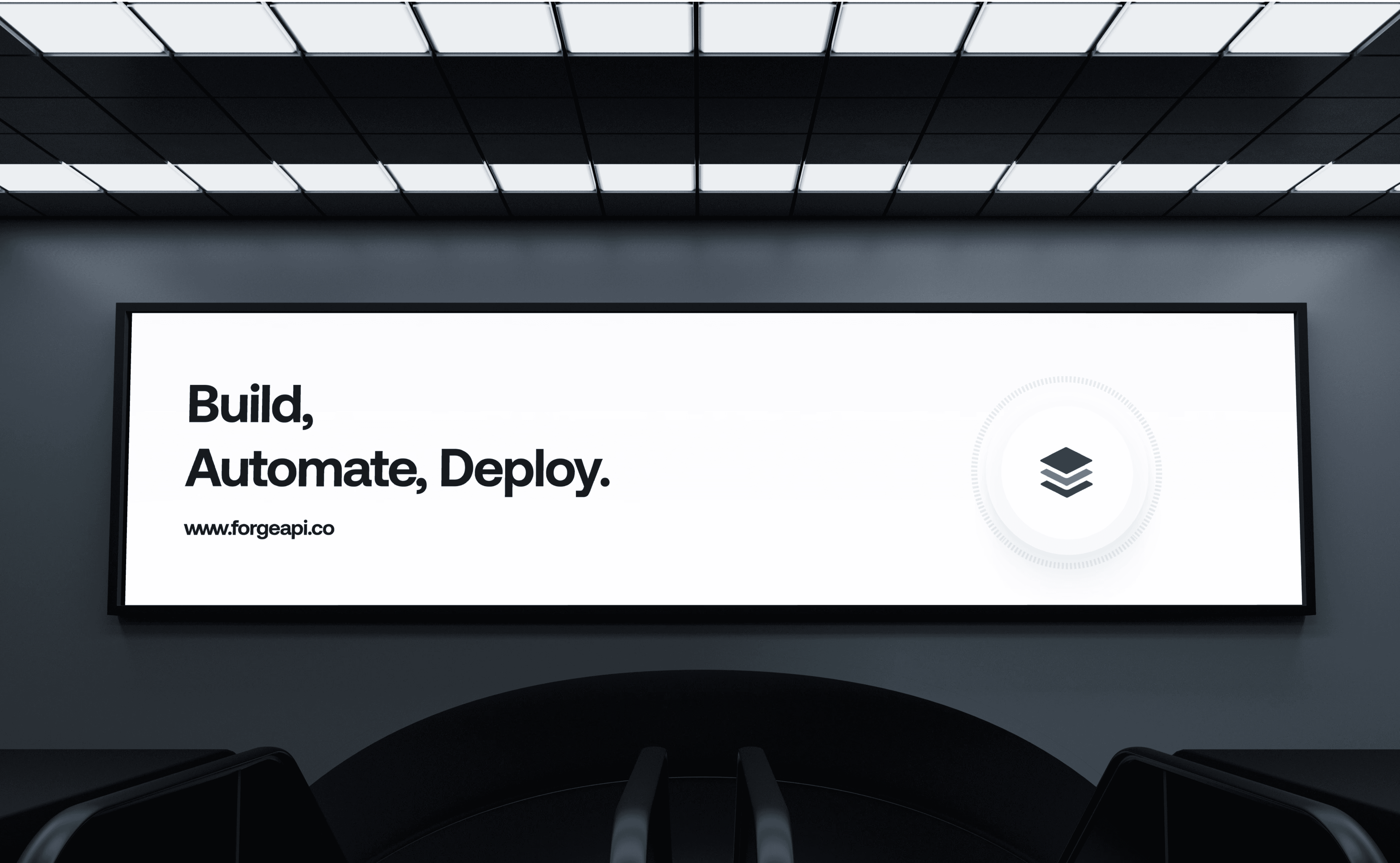
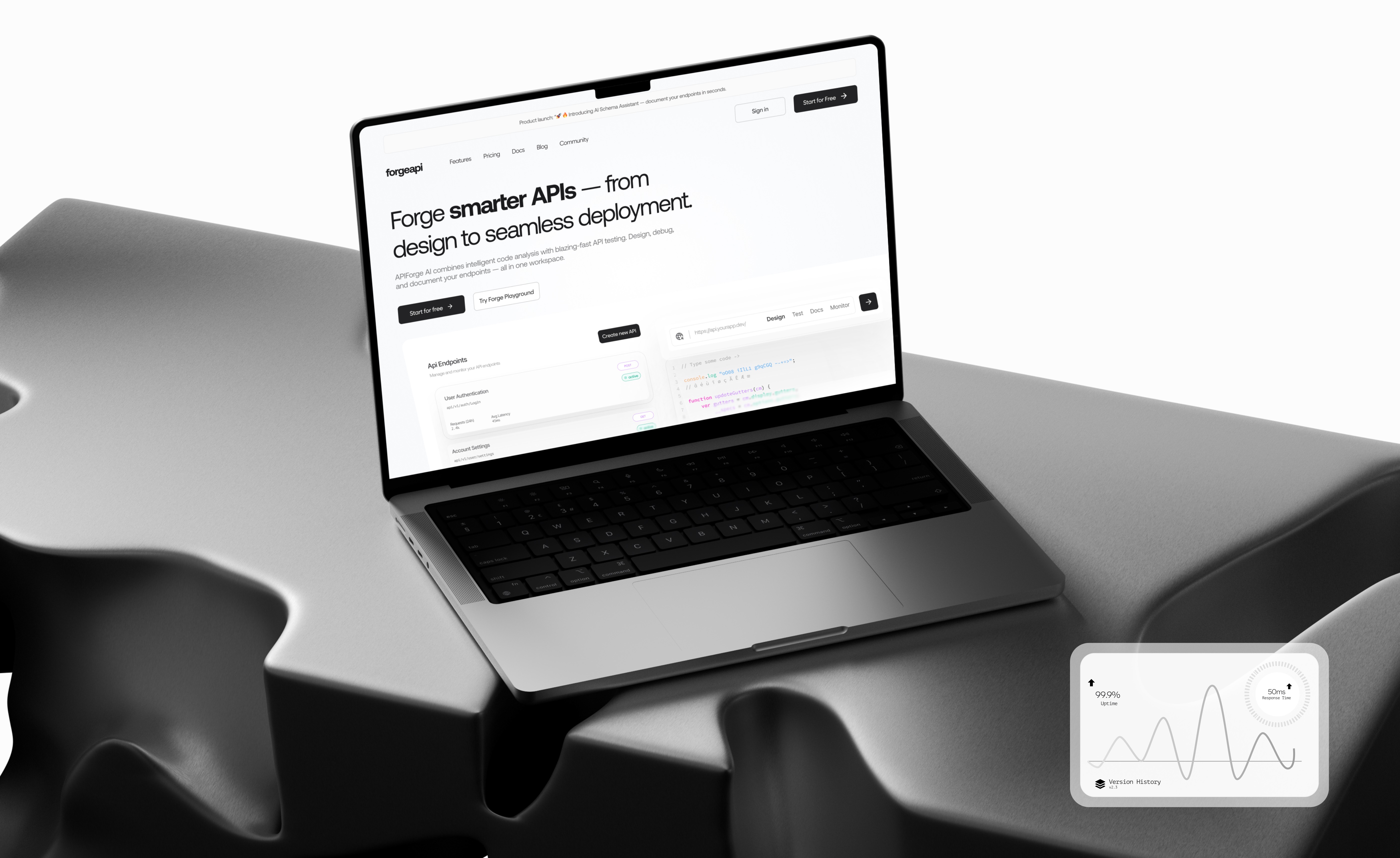
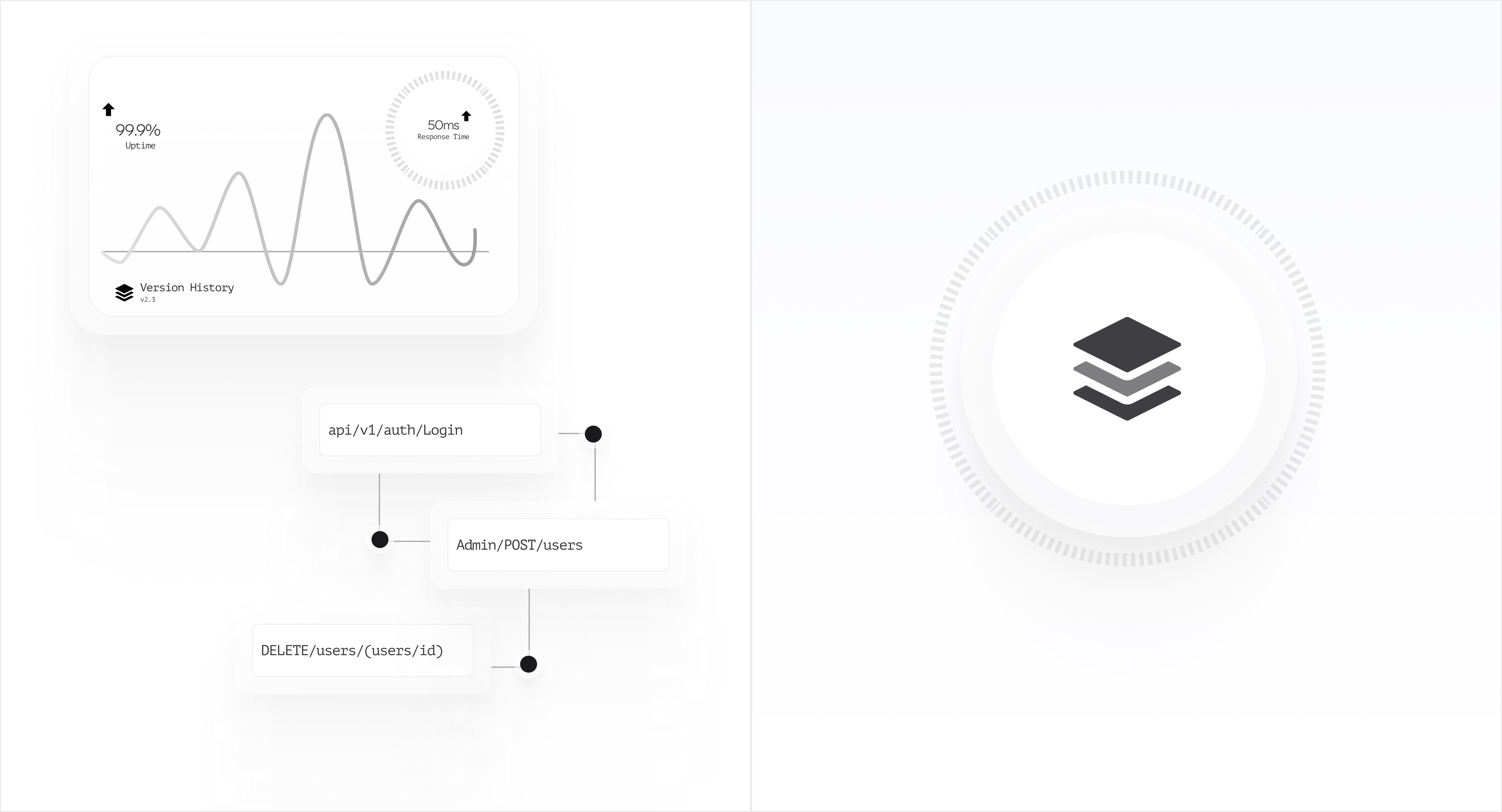
The brand identity had to bridge two worlds: clean enough for enterprise buyers, grounded enough for the individual developer who has strong opinions about typefaces. The stacked-layers logomark came from the idea of composability — APIs as layered abstractions, each level building on the one below.
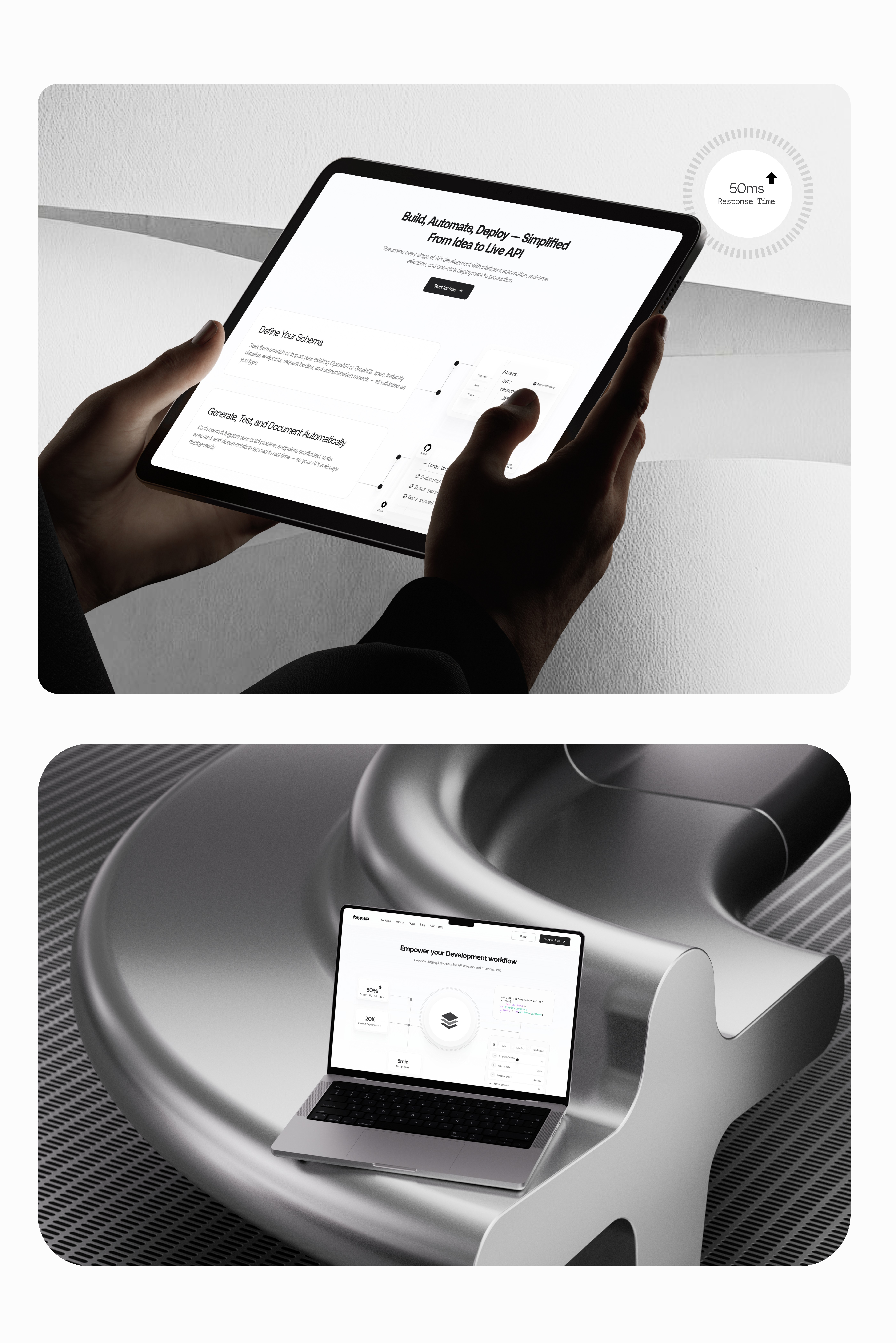
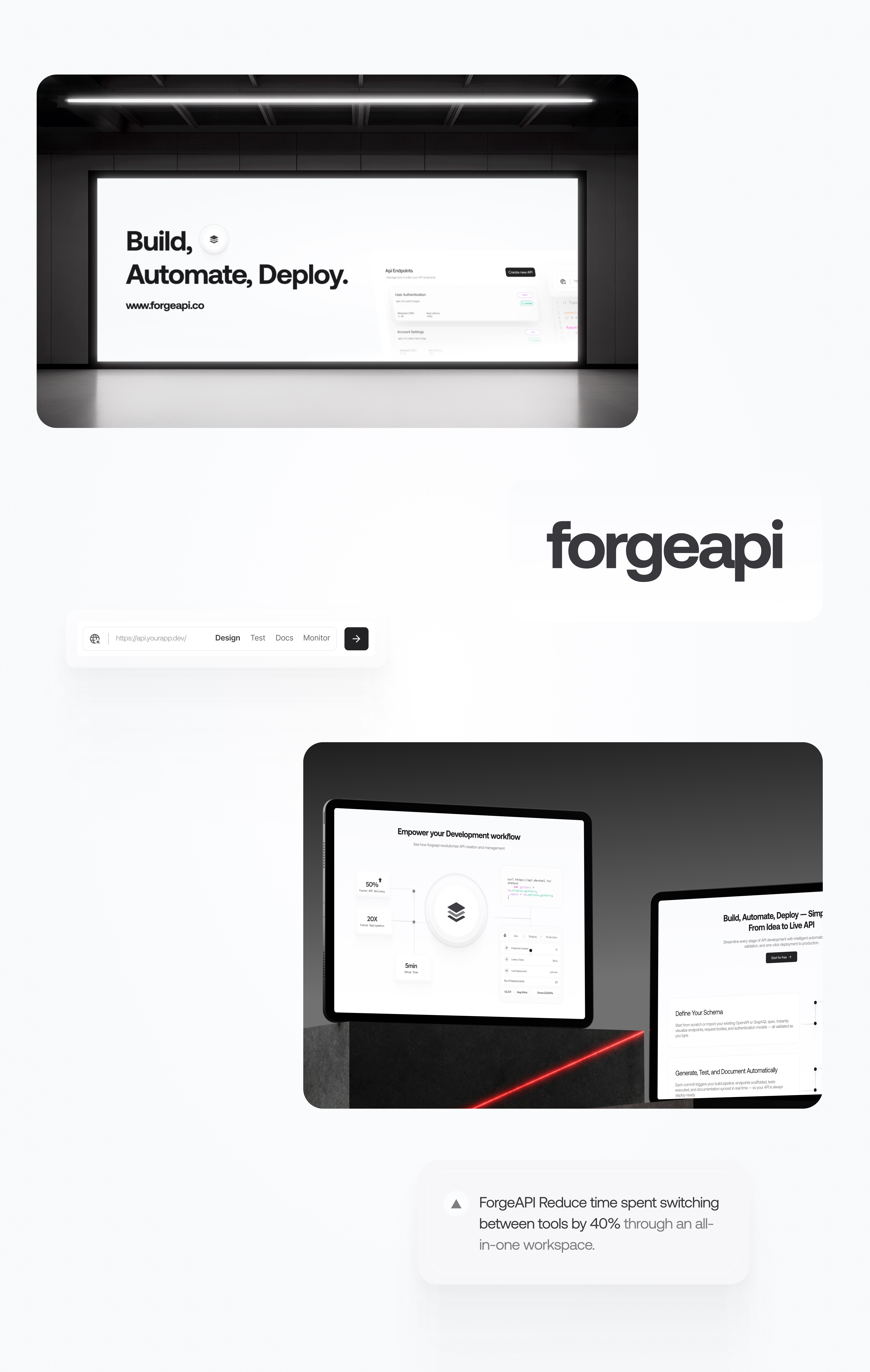
That number came from the beta cohort directly: developers self-reported a 40% reduction in tool-switching during their daily API work. Fifty percent faster API delivery, 20x faster deployments, and a 5-minute setup time that previous tools couldn't come close to. We're proud of those numbers, but we're more proud of the qualitative feedback: "this is the first API tool I actually want to use."
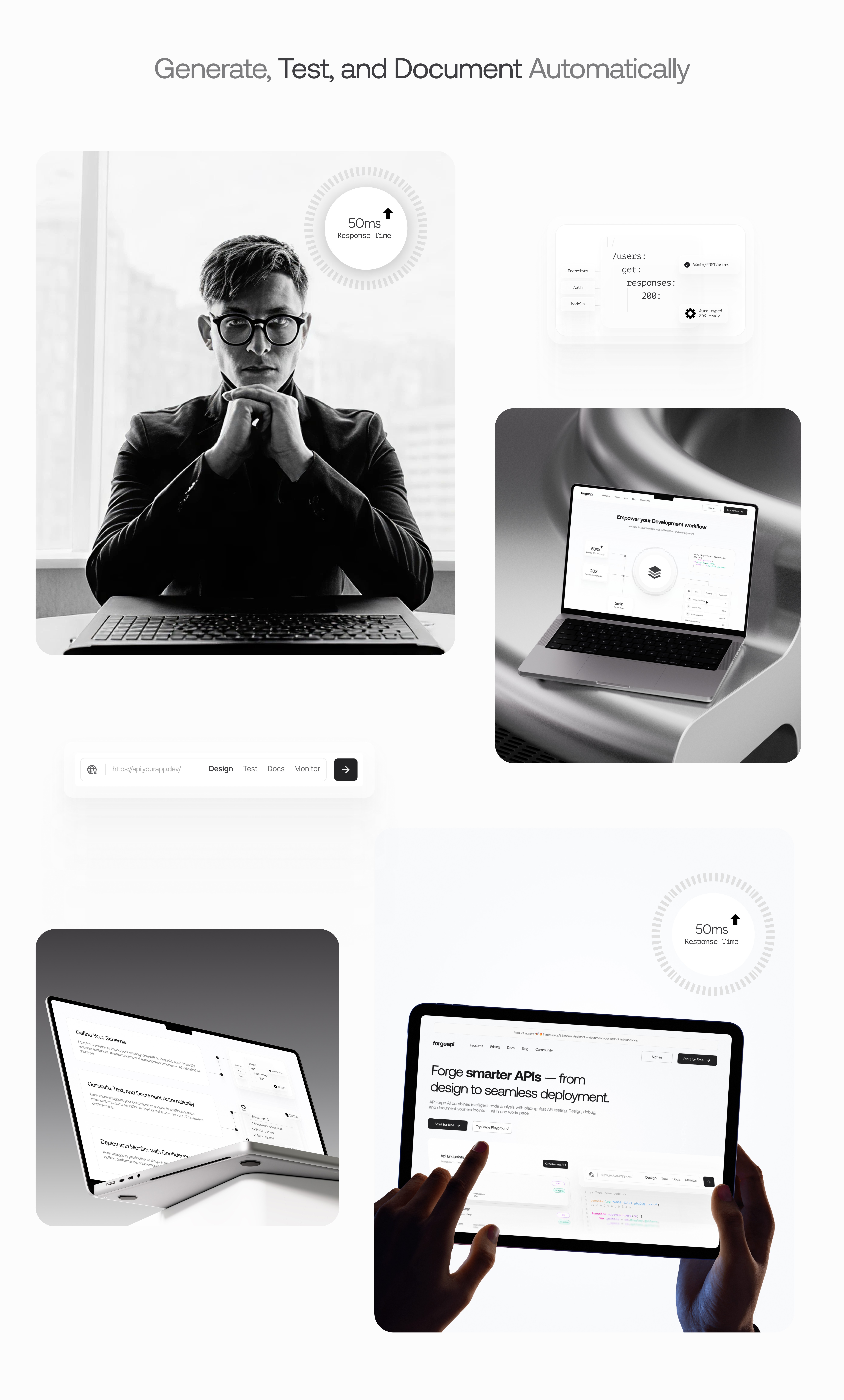
We moved fast and that served us well, but the mobile experience got less attention than it deserved. The product is primarily used on desktop, and that became a justification for deprioritizing mobile that we shouldn't have accepted so easily. The mobile screens we shipped work — they don't sing.
